The Power of Data-Driven Insights: Mastering Analytics and Reporting in Modern Business Strategy
In today’s fast-paced digital landscape, analytics and reporting have evolved from mere data collection tools into strategic assets that drive business decisions. As organizations increasingly rely on real-time information, mastering these disciplines has become essential for staying competitive. This guide explores how effective analytics and reporting can transform raw numbers into meaningful actions.
By integrating advanced analytical techniques with insightful reporting mechanisms, businesses unlock opportunities for innovation and growth. Whether you’re part of the MarkAxis community or exploring ways to enhance your organization’s performance metrics, understanding the nuances of analytics is crucial. Let us delve deeper into what makes analytics not just informative but transformative.
Fundamentals of Analytics and Their Role in Strategic Decision-Making
Analytics encompasses various methodologies aimed at extracting value from data sets. At its core, it involves collecting, processing, analyzing, interpreting, and presenting data to support informed decision-making processes within an organization.
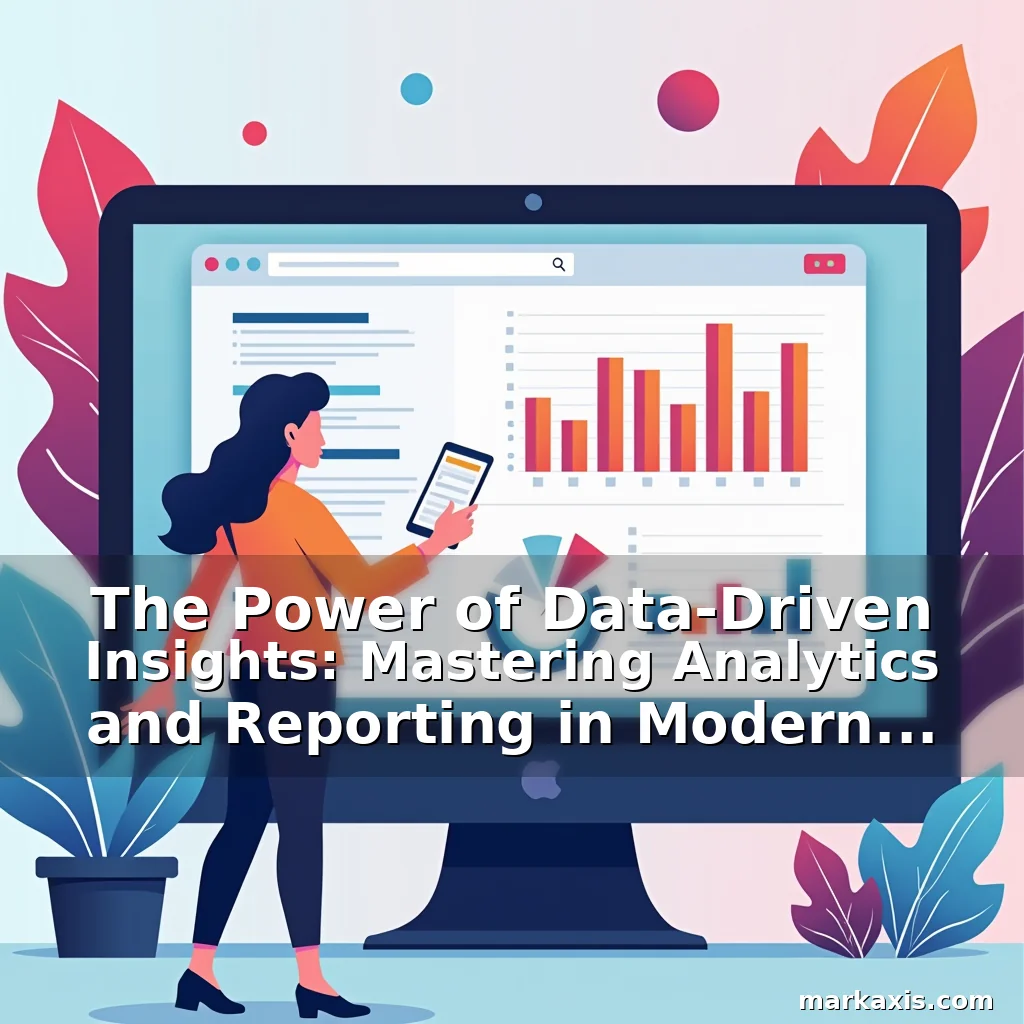
This process transforms complex datasets into understandable formats such as charts, graphs, dashboards, or reports. These visualizations help stakeholders identify trends, patterns, and anomalies quickly without needing extensive technical knowledge.
Strategic use of analytics enables companies to make timely decisions based on empirical evidence rather than intuition alone. By leveraging historical data alongside predictive models, leaders gain foresight into potential future scenarios.
Data-driven strategies are particularly vital during periods of uncertainty where traditional methods might fall short. They provide clarity amidst ambiguity by highlighting key factors influencing outcomes across different departments or market segments.
- Data Collection: Involves gathering relevant information from diverse sources including customer interactions, sales records, website traffic logs, etc., ensuring accuracy and completeness through systematic approaches.
- Data Processing: Refers to cleaning up collected data—removing duplicates, correcting errors—and organizing them systematically so they’re ready for analysis purposes.
- Data Analysis: Focuses on examining processed data using statistical tools and algorithms to uncover hidden relationships among variables; this stage often reveals critical insights useful for strategic planning.
- Reporting & Visualization: Converts analyzed results into user-friendly representations that facilitate easy interpretation by non-experts while maintaining factual integrity.
The Evolution of Reporting Tools and Technologies
Over time, reporting technologies have significantly advanced to meet growing demands for efficiency and precision. Traditional manual report creation has given way to automated systems capable of generating comprehensive analyses instantly.
Modern platforms leverage cloud computing capabilities allowing seamless access to updated reports anytime anywhere. This shift towards automation ensures consistency while reducing human error associated with handcrafted documents.
Advanced visualization software now offers interactive features enabling users to drill down into specifics easily. Such interactivity empowers analysts to explore multiple facets of their data dynamically instead of relying solely on static presentations.
Integration with artificial intelligence further enhances reporting functionalities by identifying correlations automatically and suggesting possible interpretations based on learned patterns over time.
Emerging Trends Shaping Future Reports
A recent survey indicates that nearly 89% of enterprises plan to adopt AI-powered analytics solutions within two years. This rapid adoption signals a paradigm shift toward smarter, self-learning reporting ecosystems.
Moreover, there’s been a surge in demand for real-time analytics capabilities. Businesses want immediate feedback loops that allow instant adjustments when deviations occur—an approach known as’real-time monitoring.’
Mobile accessibility continues gaining traction too. With mobile-first design principles becoming standard practice, professionals expect full functionality across devices regardless of screen size limitations.
Last but not least, sustainability considerations influence modern reporting practices. Many corporations now include environmental impact assessments alongside financial figures reflecting broader corporate responsibility goals.
Leveraging Big Data for Enhanced Business Intelligence
Big data refers to extremely large and varied datasets generated daily from numerous sources. Its volume, velocity, and variety pose challenges yet offer unprecedented opportunities for those willing to harness its power effectively.
Organizations utilizing big data benefit immensely from improved forecasting accuracy due to increased sample sizes available for modeling exercises. Predictive analytics powered by machine learning algorithms becomes highly accurate under such conditions.
Furthermore, enhanced personalization levels emerge naturally from deep dives into consumer behavior patterns extracted via sophisticated segmentation techniques applied against vast repositories containing millions upon millions of transactions.
However, managing such colossal volumes requires robust infrastructure investments upfront—cloud storage solutions coupled with distributed computing frameworks prove indispensable here.
Implementing Effective KPIs for Measurable Outcomes
Key Performance Indicators serve as quantifiable measures indicating progress towards achieving defined objectives. Choosing appropriate KPIs depends largely on organizational structure, industry standards, and individual departmental needs.
For instance, marketing teams may prioritize conversion rates whereas IT departments could track system uptime percentages. Ensuring alignment between selected indicators and overall company vision remains paramount during implementation phases.
Regularly reviewing chosen KPIs helps maintain relevance especially since external environments change frequently affecting previously valid benchmarks significantly.
It’s also wise to establish clear thresholds determining acceptable ranges around target values thereby providing early warnings before issues escalate beyond manageable limits.
- Customer Acquisition Cost (CAC):** Measures cost incurred acquiring new customers relative to revenue generated post-acquisition. High CAC ratios indicate inefficiencies requiring optimization efforts elsewhere.
- Net Promoter Score (NPS):** Gauges customer satisfaction levels through simple questionnaires asking respondents likelihood of recommending services/products to others.
- Employee Engagement Index:** Reflects workforce morale typically measured through periodic pulse surveys capturing sentiments regarding workplace culture, management effectiveness, etc.
- Inventory Turnover Ratio:** Assesses how efficiently stock items get sold off compared against restocking frequency helping manage cash flow better.
Bridging Gaps Between Analysts and Stakeholders Through Clear Communication
Cross-functional communication plays a pivotal role in translating technical findings into actionable steps comprehensible even to non-specialists. Without proper translation layers, otherwise valuable insights risk being misunderstood or overlooked entirely.
Creating narratives around data stories proves instrumental in making abstract concepts tangible thus increasing chances of successful implementations stemming from reported conclusions.
Visual storytelling complements verbal explanations well by offering concrete examples illustrating theoretical assertions made earlier throughout discussions.
Training programs focused specifically on enhancing cross-departmental dialogue ensure everyone involved shares common language facilitating smoother transitions from discovery phase right through execution stages seamlessly.
Ensuring Accuracy and Integrity Throughout Analytical Processes
Maintaining high standards of accuracy forms foundation upon which reliable conclusions rest. Any discrepancies introduced early propagate downstream causing cascading effects potentially misleading entire operations.
Employing rigorous validation procedures mitigates risks associated with flawed assumptions creeping unnoticed until late stages when rectifying becomes costly both financially and temporally.
Automated checks embedded within workflows assist in catching inconsistencies promptly preventing erroneous outputs reaching end-users who depend heavily on these resources daily.
Additionally, establishing audit trails documenting every step taken allows traceability aiding investigations whenever questions arise concerning methodology used behind particular reports produced.
Ethical Considerations in Handling Sensitive Information
Respecting privacy rights stands central whenever dealing with personally identifiable information (PII) or other sensitive categories protected under legal regulations globally. Mishandling such material breaches trust eroding long-term relationships built with clients/employees alike.
Compliance with GDPR, CCPA, HIPAA depending region dictates strict protocols governing usage restrictions placed upon collected data ensuring transparency maintained consistently throughout lifecycle journeys traversed by each piece of recorded activity.
Anonymous aggregation methods reduce exposure risks substantially although complete elimination remains elusive unless opting out completely—which isn’t always feasible nor desirable practically speaking.
Transparent policies detailing exactly what gets tracked why plus controls afforded individuals over their own data empower people feeling valued rather than monitored fostering positive brand perceptions ultimately.
Fostering a Culture of Continuous Improvement Based on Feedback Loops
Encouraging regular reviews foster environments conducive continuous enhancements driven primarily by constructive criticism received periodically from diverse stakeholder groups engaged actively within ongoing projects.
Feedback mechanisms designed thoughtfully capture voices representing wide spectrum opinions avoiding siloed perspectives limiting scope narrowly focusing only internal viewpoints neglecting wider audience expectations outside confines walls.
Actively listening attentively then responding appropriately demonstrates commitment valuing input genuinely rather than superficially acknowledging contributions merely for showmanship purposes alone.
Cultivating openness facilitates free exchange ideas promoting creativity sparking innovations never considered previously opening doors leading breakthrough discoveries transforming current realities dramatically.
Conclusion
In conclusion, mastering analytics and reporting is integral to navigating contemporary business landscapes successfully. It equips organizations with necessary agility required adapting swiftly changing dynamics characterizing global markets today.
To thrive amidst intensifying competition, embracing data-centric cultures becomes imperative. Leaders must champion initiatives prioritizing quality assurance alongside ethical handling ensuring sustainable growth trajectories aligned closely with societal norms prevailing universally accepted standards worldwide.

news is a contributor at MarkAxis. We are committed to providing well-researched, accurate, and valuable content to our readers.